
This is an old revision of the document!
Table of Contents
Crafting Guide
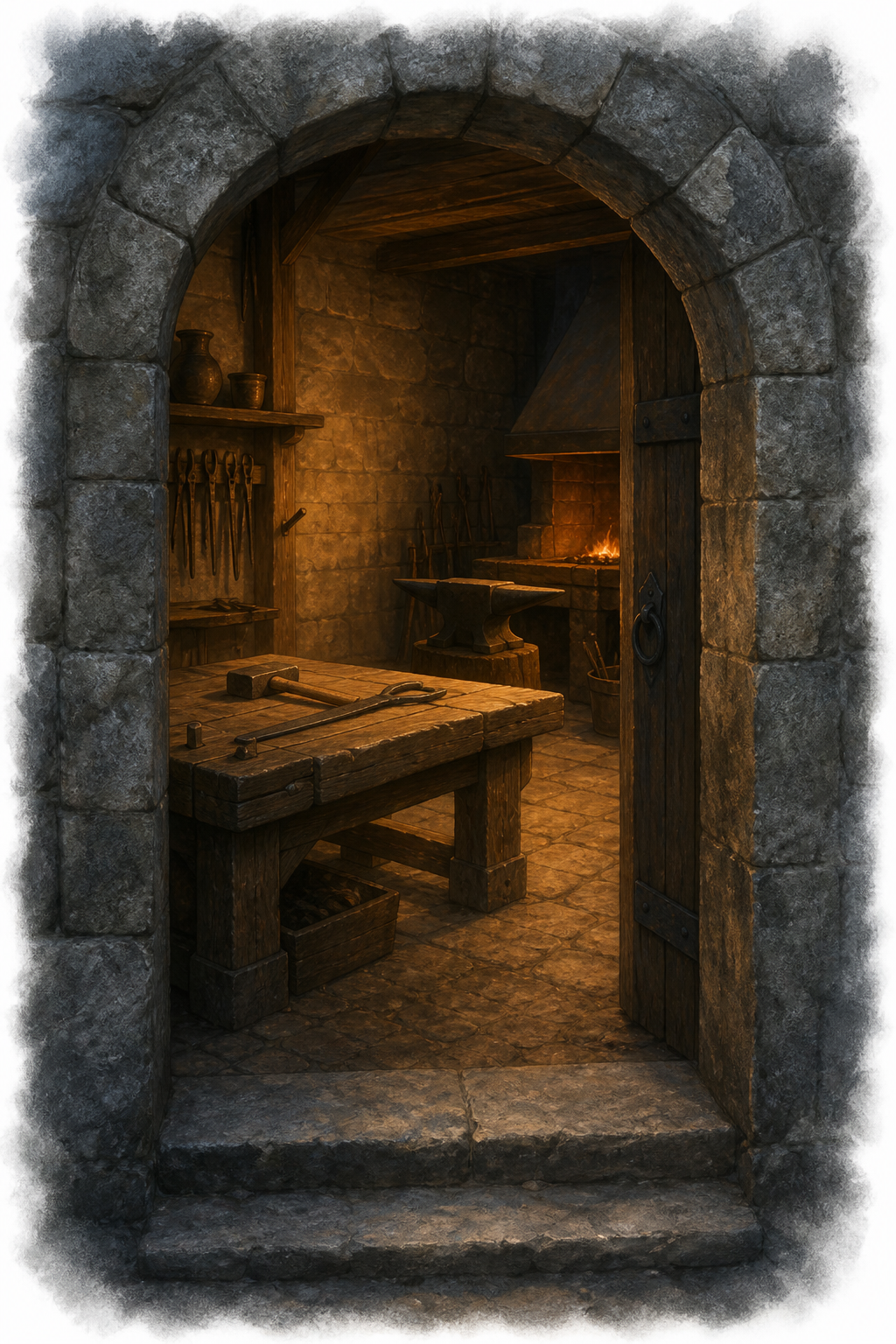
Crafting lets you gather resources and turn them into materials, equipment, potions, tools, and other useful items. The main crafting room contains a trader and all of the workstations described in this guide.
- Basic crafting tools can be bought from the trader in the crafting room.
- Improved tools can be made through Weapon-Smithing. These tools increase your chance of success.
- To check your crafting leveling progress, open Journal → Crafting Skills.
- Standard recipes use the materials associated with their craft. Some recipes also need an extra component, usually gathered from a monster through Hunting, such as a boar tusk or a minotaur horn.
Difficulty colours
The name of a material or recipe is colour-coded to show its difficulty compared with your current crafting skill. From easier to harder, the colours are:
| Relative difficulty | Display colour |
|---|---|
| 1 — easiest | White |
| 2 | Green |
| 3 | Light blue |
| 4 | Dark blue |
| 5 — hardest | Red |
The colour is a relative guide, not a displayed percentage. Improving the relevant skill or using a better tool increases the chance of success.
Crafting overview
| Craft | Maximum level | What it does | Tool | Workstation or target |
|---|---|---|---|---|
| Mining | 40 | Gathers smithing ores, precious-metal ores, and gemstones. | Pickaxe | Boulders and mineral deposits in mines and dungeons |
| Weapon-Smithing | 80 | Creates weapons, tools, and weapon-making intermediate products. | Blacksmith's hammer | Anvil |
| Armor-Smithing | 80 | Creates helmets, circlets, shields, armour, and intermediate products. | Blacksmith's hammer | Anvil |
| Jewel-Making | 80 | Cuts gemstones and creates jewellery, staves, and off-hand accessories. | Gem-cutting chisel | Gem Cutter, Mould Machine, and Jeweller's Table |
| Sewing | 80 | Uses prepared hides and other textiles to make wearable equipment. | None | Loom |
| Tanning | 40 | Converts raw skins into materials ready for Sewing. | None | Curing Tub and Hide Rack |
| Hunting | 40 | Gathers skins and other useful parts from animals and monsters. | Skinning knife | Animal or monster remains in the world |
| Alchemy | 40 | Makes potions, acid vials, poisons, and other alchemical products. | None | Alchemist's Apparatus |
| Smelting | 40 | Converts mined ores into ingots. | None | Smelting Forge |
The main production chains are:
- Mining → Smelting → Weapon-Smithing, Armor-Smithing, or Jewel-Making
- Hunting → Tanning → Sewing
- Hunting and herb gathering → Alchemy
- Alchemy → acid vials → Tanning
Mining
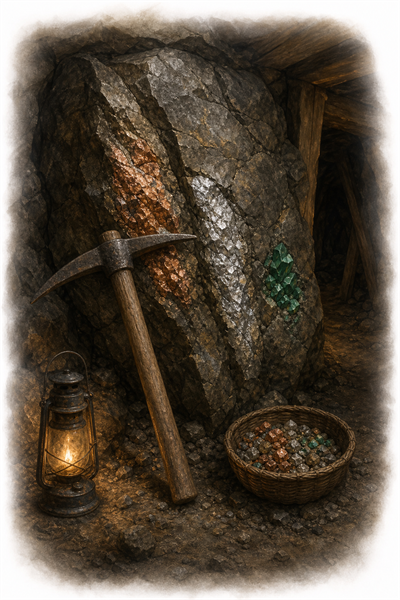
Mining requires a pickaxe. Click boulders or mineral deposits in mines and dungeons to search for ore or gemstones.
After completing the mining cycle, the gathered ore can be taken to a Smelting Forge. A good starting location is the Old Mine occupied by goblins: travel one area south from Loftenwood, then continue east until you find the mine.
Mining materials
| Smithing ores | Precious-metal ores | Gemstones | Crafted item required level |
|---|---|---|---|
| Copper | Silver | Greenstone | 4 |
| Iron | Amethyst | 8 | |
| Syenite | Topaz | 12 | |
| Rubicite | Gold | Flame Opal | 16 |
| Verdicite | Sapphire | 20 | |
| Mithral | Ruby | 25 | |
| Adamantine | Platinum | Emerald | 30 |
| Myrkandite | Diamond | 35 |
Smelting
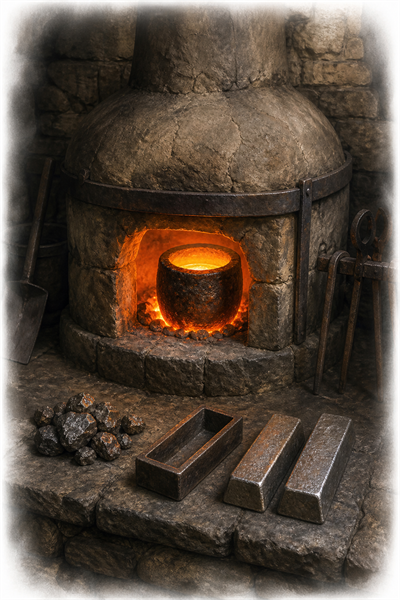
Smelting uses ores gathered through Mining to produce ingots. Smithing ores become ingots for Weapon-Smithing and Armor-Smithing. Silver, gold, and platinum are used mainly by Jewel-Making.
How to smelt
- Place suitable ore into the Smelting Forge.
- Choose the flame size. Smaller flames are more difficult but can produce more ingots.
- Complete the crafting interaction and collect the resulting ingots.
| Flame size | Difficulty modifier | Ingots gained |
|---|---|---|
| Largest flames | Basic recipe difficulty | 1 ingot |
| Medium flames | Difficulty increased by 1 level | 1–2 ingots |
| Smallest flames | Difficulty increased by 2 levels | 1–3 ingots |
Medium and small flames can award more crafting experience because they increase the recipe difficulty.
Smelting materials
| Input group | Confirmed examples | Output |
|---|---|---|
| Smithing ores | Copper, Iron, Syenite, Rubicite, Verdicite, Mithral, Adamantine, Myrkandite | Matching ingots |
| Precious-metal ores | Silver, Gold, Platinum | Matching ingots for Jewel-Making |
Weapon-Smithing
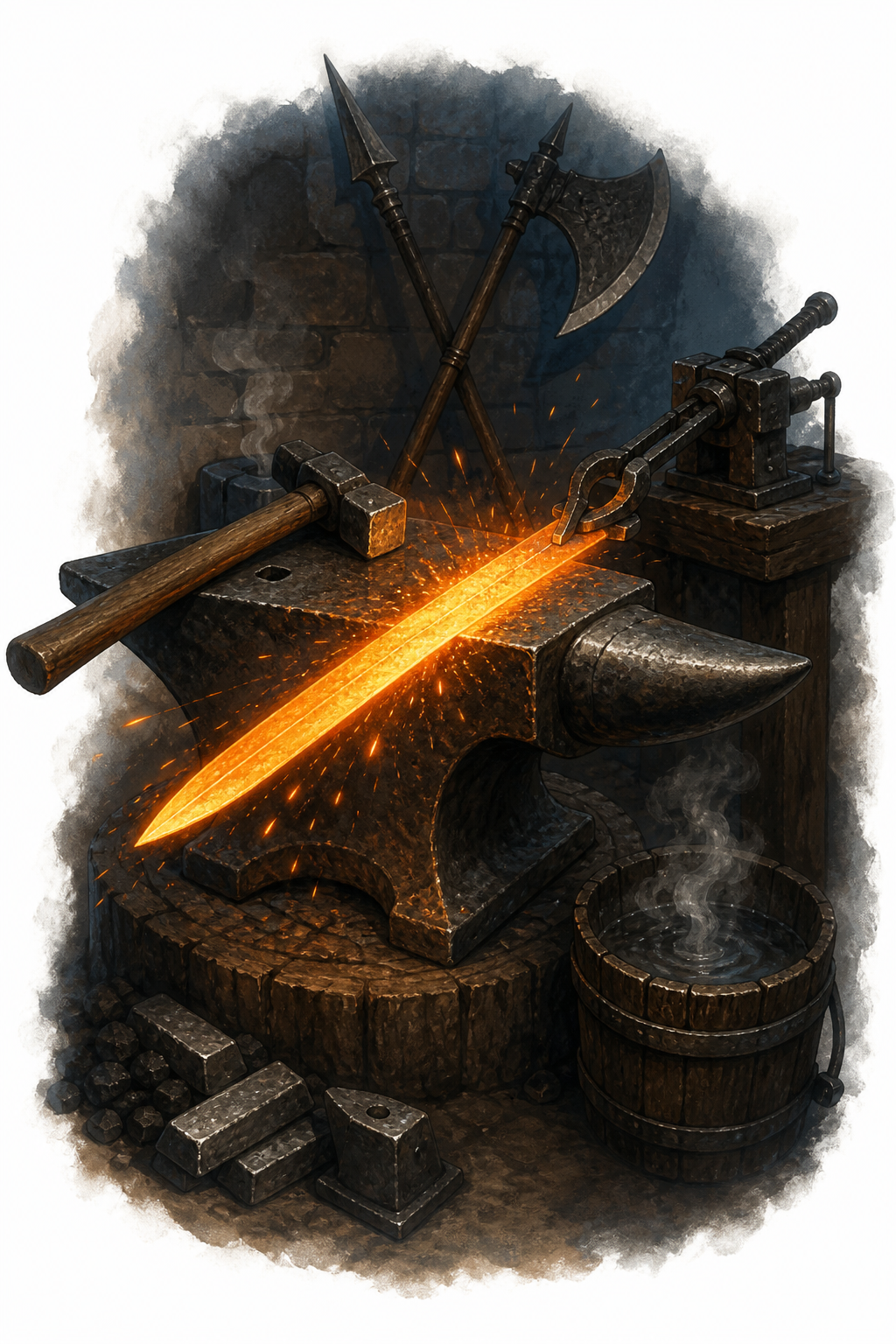
Weapon-Smithing requires a blacksmith's hammer and an anvil. Use ingots and any recipe-specific components on the anvil, choose a recipe family, and complete the crafting interaction. Weapon-Smithing also creates improved crafting tools, which increase the chance of success in their associated crafts.
Recipe families
- Light blades
- Heavy blades
- Axes
- Bludgeoning weapons
- Polearms
- Exotic and oriental weapons
- Throwing weapons
- Tools
- Intermediate products
Materials
| Material type | Use |
|---|---|
| Metal ingots | Main material for metal weapons and crafting tools |
| Intermediate products | Components made in an earlier crafting step |
| Hunting components | Extra recipe-specific materials, such as tusks or horns |
Crafted item examples
| Item | Level required | Special properties |
|---|---|---|
| Verdicite Longsword | 20 | Socketed (1) [Normal]; Damage Bonus: Acid 1d12 Damage; Enhancement Bonus: +5 |
| Myrkandite Longsword | 40 | Socketed (1) [Masterful]; Damage Bonus: Piercing 1d20 Damage; Enhancement Bonus: +8 |
Armor-Smithing
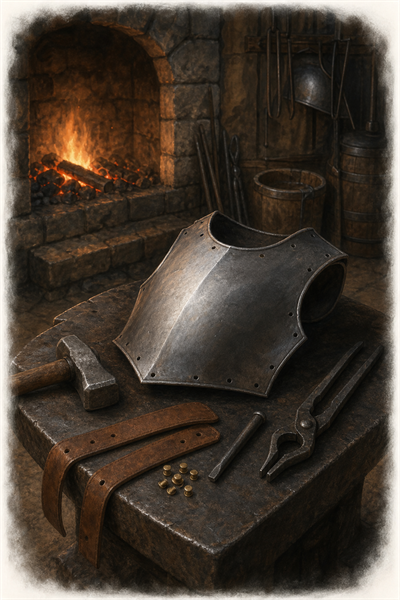
Armor-Smithing requires a blacksmith's hammer and an anvil. Place the required ingots and any additional components on the anvil, choose the equipment category, and complete the crafting interaction.
Recipe families
- Helmets
- Circlets
- Shields
- Armour
- Intermediate products
Materials
| Material type | Use |
|---|---|
| Metal ingots | Main material for helmets, shields, and armour |
| Leather | Additional material required for armour recipes |
| Intermediate products | Components made in an earlier crafting step |
| Hunting components | Extra materials required by selected recipes |
Crafted item examples
| Item | Level required | Special properties |
|---|---|---|
| Crafted Mithral Tower Shield | 25 | Ability Bonus: Strength +6; Armor Bonus: +6 (AC Shield Modifier) |
| Crafted Adamantine Chain Shirt Armor | 30 | Armor Bonus: +7 (AC Armor Modifier); Damage Resistance: Physical Resist 5/- |
Jewel-Making
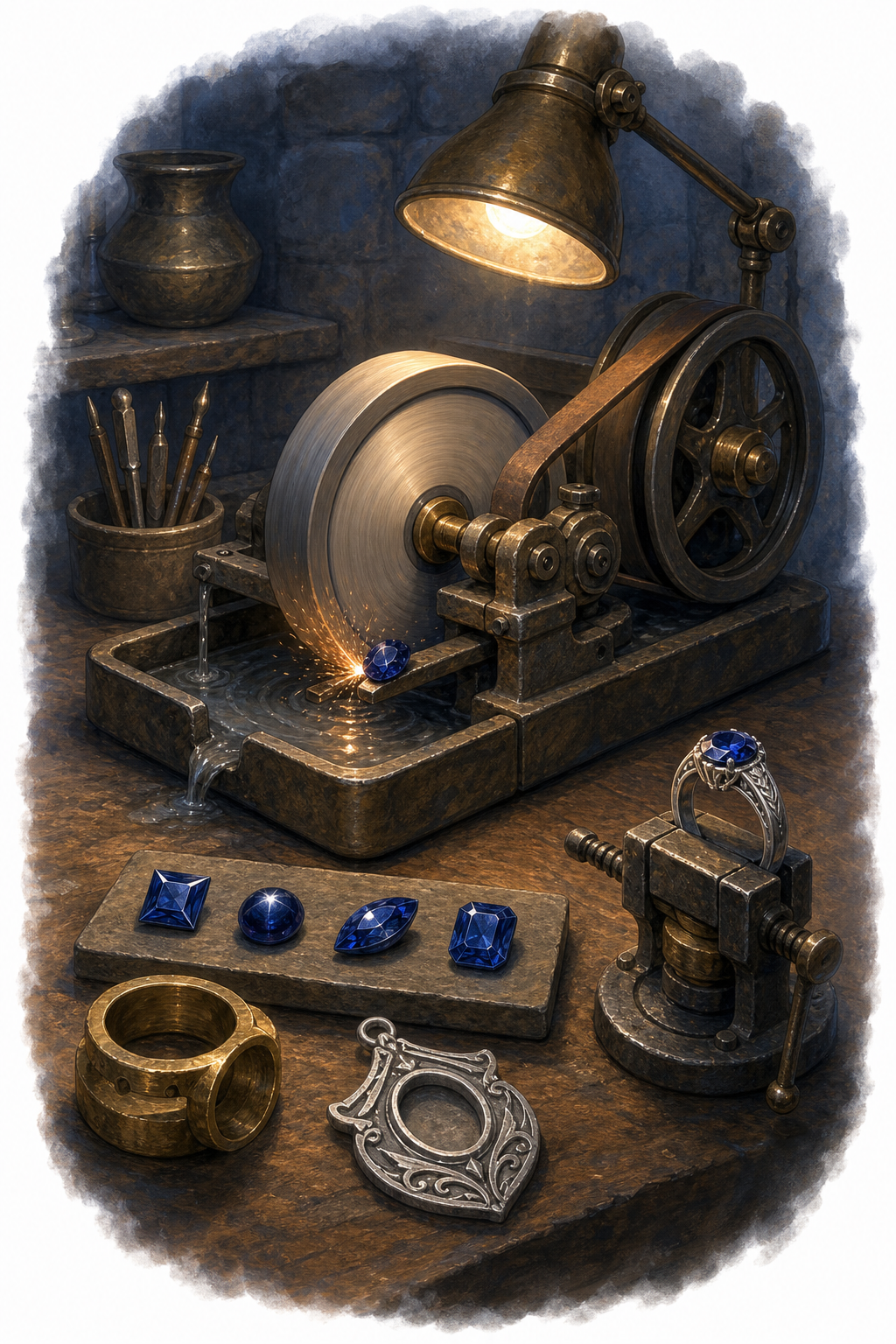
Jewel-Making is a three-stage craft. A gem-cutting chisel is used to cut gemstones, precious-metal ingots are formed into jewellery settings, and the finished components are assembled at the Jeweller's Table.
1. Cut gemstones
Use a Gem Cutter to cut a mineral gemstone into one of four shapes:
- Square
- Sphere
- Navette
- Radiant
2. Make jewellery settings
Use silver, gold, or platinum ingots at the Mould Machine to create a ring or amulet setting.
3. Assemble the item
Combine a cut gemstone with the appropriate setting at the Jeweller's Table. The Jeweller's Table is also used to create staves and off-hand accessories.
Materials
| Stage | Materials | Result |
|---|---|---|
| Gem cutting | Greenstone, Amethyst, Topaz, Flame Opal, Sapphire, Ruby, Emerald, Diamond | Square, Sphere, Navette, or Radiant cut gemstone |
| Setting creation | Silver, Gold, or Platinum ingot | Ring or amulet setting |
| Jewellery assembly | Cut gemstone + matching setting | Ring or amulet |
| Staves and off-hand accessories | [PLACEHOLDER: add confirmed component lists] | Staff or off-hand accessory |
Crafted item examples
| Item | Level required | Special properties |
|---|---|---|
| Crafted Dexterity Ring With Emerald | 30 | Ability Bonus: Dexterity +7; Skill Bonus: Hide +15; Skill Bonus: Move Silently +15 |
| Crafted Scarab With Sapphire | 20 | Armor Bonus: +5 (AC Natural Modifier); Improved Saving Throws: Universal +5 |
Hunting
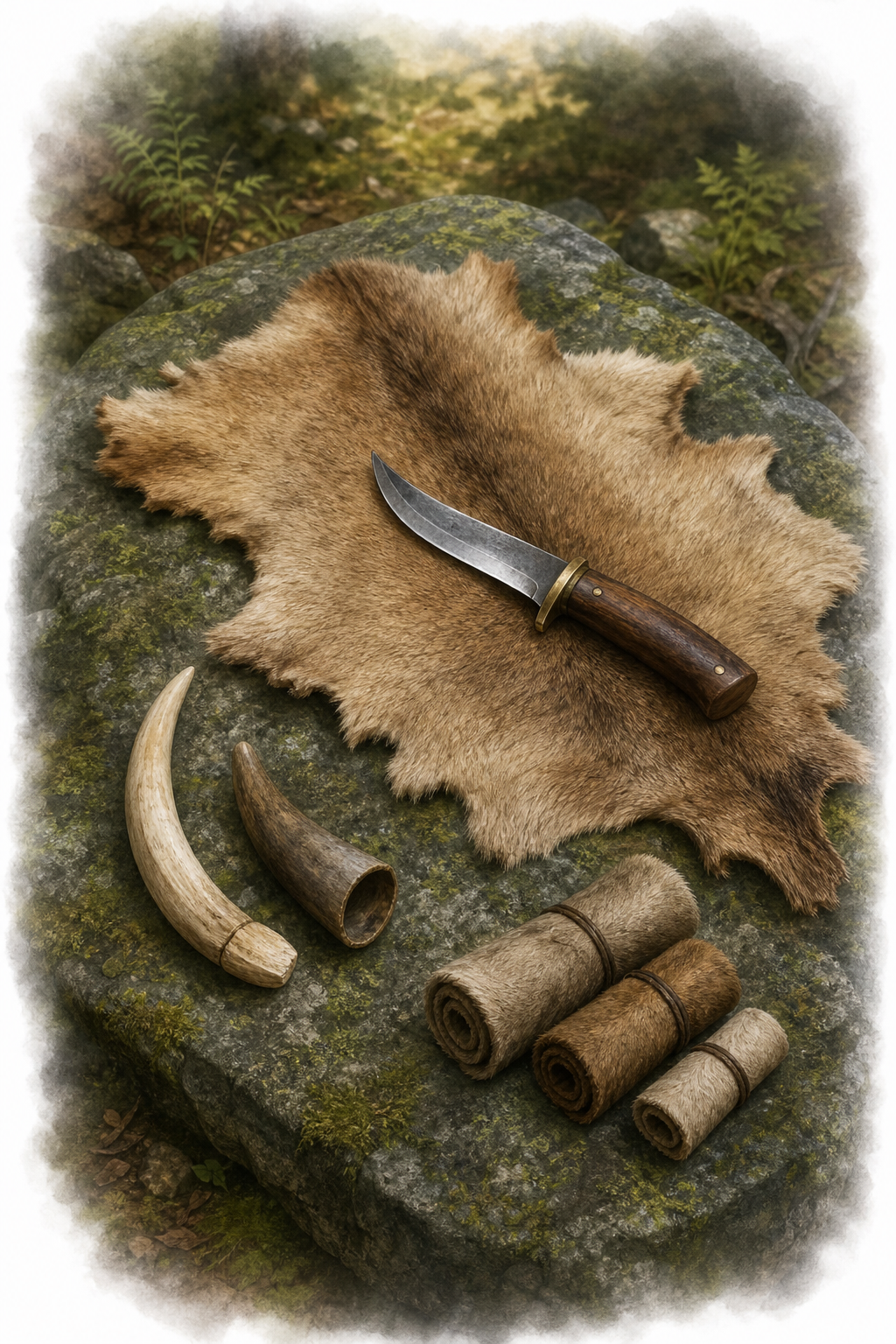
Hunting requires a skinning knife. Use it on suitable animal or monster remains to gather skins and other components.
Each skin tier has small, medium, and large variants. Different animals provide different sizes and tiers. Hunting can also produce monster parts used by Alchemy, as well as rarer components required by selected recipes in other crafts.
Skin tiers and animals
| Skin quality | Small skin | Medium skin | Large skin |
|---|---|---|---|
| Poor quality | Rabbit | Badger | Deer |
| Average | Boar | Hyena | Brown Bear |
| Quality | Dire Boar | Dire Wolf | Dire Bear |
| Above average | Cave Boar | Shadow Mastiff | Grizzly Bear |
| Superior | Sewer Rat | Worg | Tiger |
| First-rate | Polar Boar | Shadow Beast | Polar Bear |
| Masterful | Malar Bat | Malar Panther | Dire Tiger |
Hunting can also produce monster parts used by Alchemy, as well as rarer components required by selected recipes in other crafts. Examples include a boar tusk or minotaur horn.
Tanning
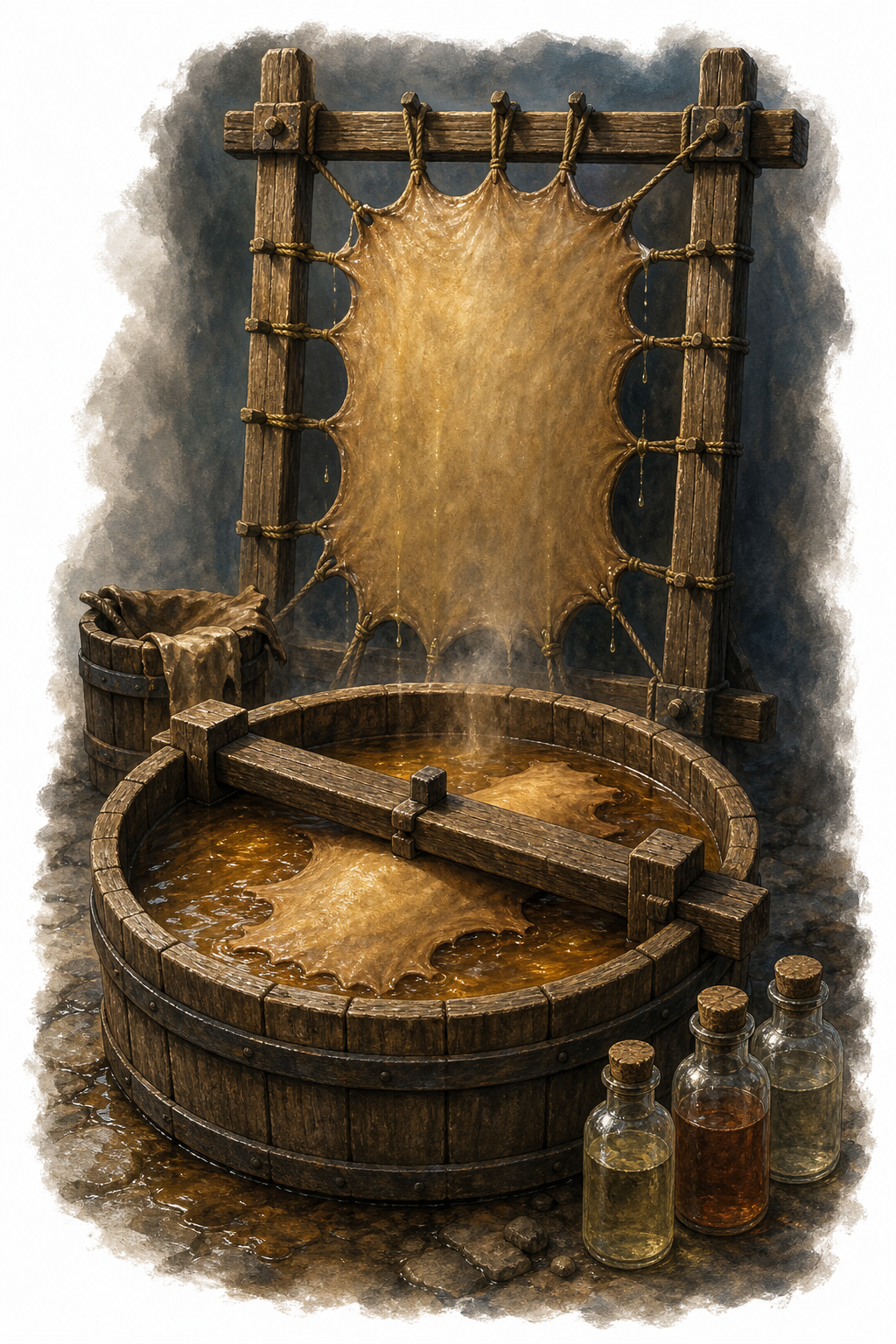
Tanning converts skins gathered through Hunting into materials ready for Sewing.
How to tan skins
- Use the Curing Tub to create cured skins.
- Use the Hide Rack to turn cured skins into materials ready for Sewing.
Cured-skin recipes
| Size | Quality | Tanning level | Skin required | Acid required |
|---|---|---|---|---|
| Small | Poor quality | 1 | 1 × Skin of a Rabbit | 1 × Acid Vial, Giant Spider |
| Small | Average | 10 | 1 × Skin of a Boar | 1 × Acid Vial, Bloodfly |
| Small | Quality | 15 | 1 × Skin of a Dire Boar | 1 × Acid Vial, Dire Spider |
| Small | Above average | 20 | 1 × Skin of a Cave Boar | 1 × Acid Vial, Cave Spider |
| Small | Superior | 25 | 1 × Skin of a Sewer Rat | 1 × Acid Vial, Dark Spider |
| Small | First-rate | 30 | 1 × Skin of a Polar Boar | 1 × Acid Vial, Wywern |
| Small | Masterful | 35 | 1 × Skin of a Malar Bat | 1 × Acid Vial, Primeval Spider |
| Medium | Poor quality | 3 | 1 × Skin of a Badger | 1 × Acid Vial, Giant Spider |
| Medium | Average | 13 | 1 × Skin of a Hyena | 1 × Acid Vial, Bloodfly |
| Medium | Quality | 18 | 1 × Skin of a Dire Wolf | 1 × Acid Vial, Dire Spider |
| Medium | Above average | 23 | 1 × Skin of a Shadow Mastiff | 1 × Acid Vial, Cave Spider |
| Medium | Superior | 28 | 1 × Skin of a Worg | 1 × Acid Vial, Dark Spider |
| Medium | First-rate | 33 | 1 × Skin of a Shadow Beast | 1 × Acid Vial, Wywern |
| Medium | Masterful | 38 | 1 × Skin of a Malar Panther | 1 × Acid Vial, Primeval Spider |
| Large | Poor quality | 5 | 1 × Skin of a Deer | 2 × Acid Vial, Giant Spider |
| Large | Average | 15 | 1 × Skin of a Brown Bear | 2 × Acid Vial, Bloodfly |
| Large | Quality | 20 | 1 × Skin of a Dire Bear | 2 × Acid Vial, Dire Spider |
| Large | Above average | 25 | 1 × Skin of a Grizzly Bear | 2 × Acid Vial, Cave Spider |
| Large | Superior | 30 | 1 × Skin of a Tiger | 2 × Acid Vial, Dark Spider |
| Large | First-rate | 35 | 1 × Skin of a Polar Bear | 2 × Acid Vial, Wywern |
| Large | Masterful | 40 | 1 × Skin of a Dire Tiger | 2 × Acid Vial, Primeval Spider |
After curing, use the matching cured skin at the Hide Rack to create the prepared material used by Sewing.
Sewing
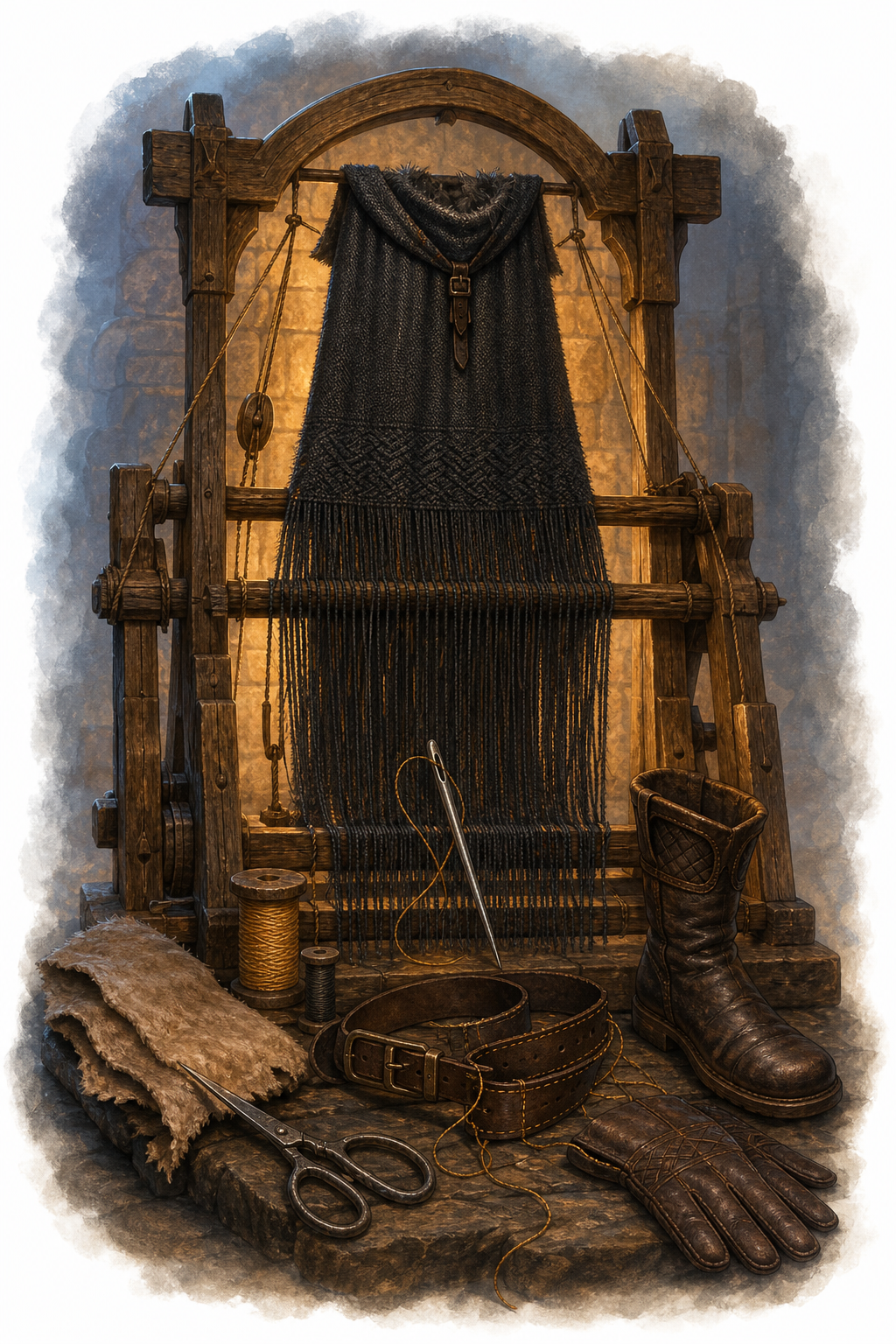
Sewing uses mainly the prepared hides made through Tanning to produce wearable equipment and intermediate products. Bring the required materials to the Loom, choose a recipe category, and complete the crafting interaction.
Recipe families
- Boots
- Gloves
- Cloaks
- Belts
- Clothing and armour
- Other items
- Intermediate products
Materials
| Material type | Use |
|---|---|
| Prepared hides | Main material for many wearable items |
| Intermediate products | Components made in an earlier Sewing or Tanning step |
| Hunting components | Extra recipe-specific materials |
Crafted item examples
| Item | Level required | Special properties |
|---|---|---|
| Crafted Superior Cloak of Fortification | 20 | Armor Bonus: +6 (AC Deflection Modifier); Improved Saving Throws: Universal +6 |
| Crafted Superior Belt of Strength | 25 | Ability Bonus: Strength +6; Skill Bonus: Discipline +20 |
Alchemy
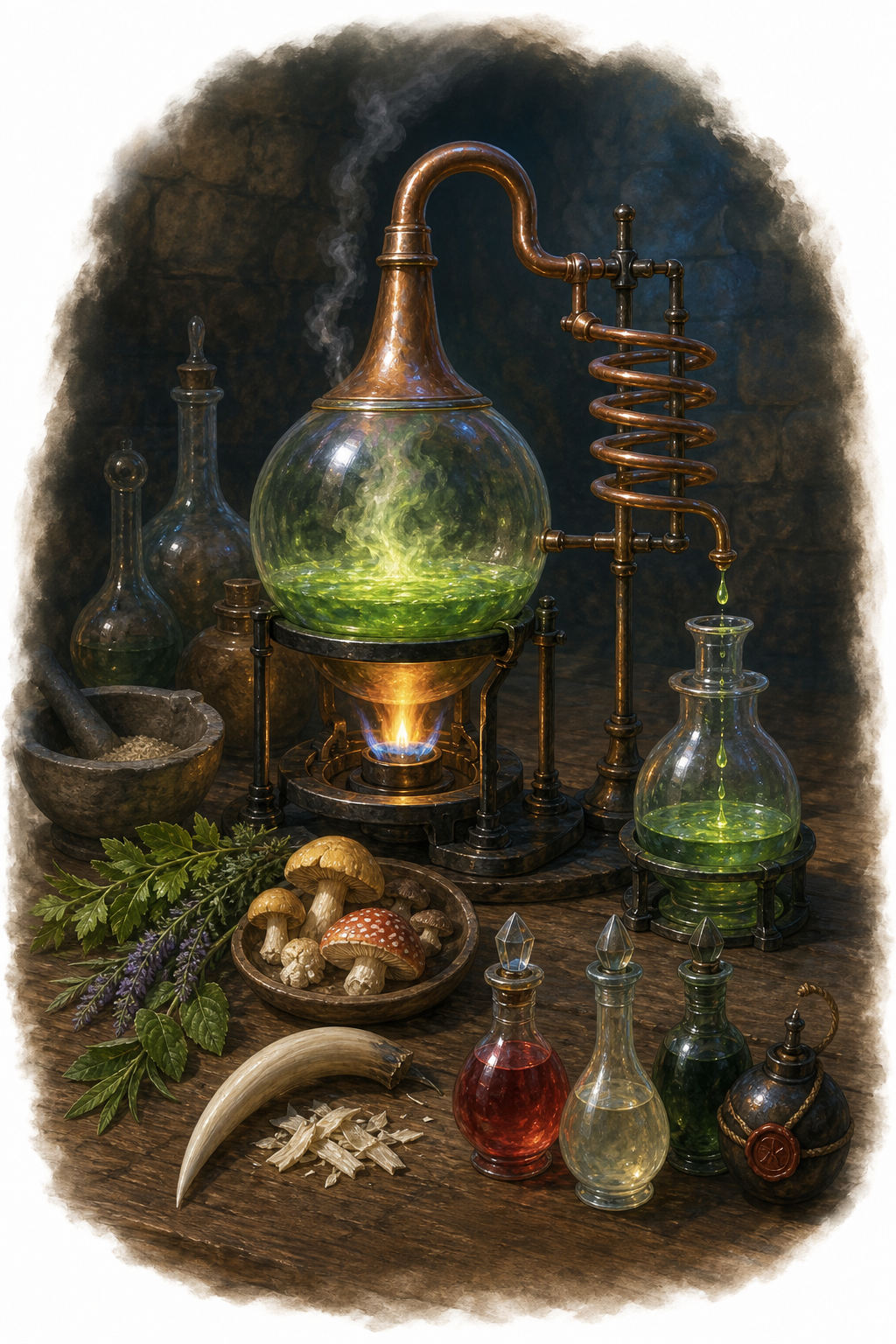
Alchemy uses gathered herbs and selected monster parts obtained through Hunting. At the Alchemist's Apparatus, these materials can be turned into potions, acid vials for Tanning, poisons, and other alchemical products.
Recipe families
- Healing potions
- Enhancing potions
- Other potions
- Protective potions
- Bombs and grenades
- Traps
- Poisons
- Intermediate products, including acid vials for Tanning
Materials
| Material type | Use |
|---|---|
| Gathered herbs | Main ingredients for potion and alchemical recipes |
| Monster parts gathered through Hunting | Ingredients for selected potions, poisons, and other products |
| Intermediate products | Inputs for later Alchemy recipes or other crafts |
Crafted item examples
| Item | Level required | Special properties |
|---|---|---|
| Potion of Endurance | 10 | Ability Bonus: Constitution +4; Potion Duration: 1 hour; Use: Potion Single Use |
| Poison Vial, Strong | 16 | Damage Bonus: Poison 1d8 Damage; Potion Duration: 2 minutes; Use: Poison Weapon Single Use |